Cash for Clunkers...Not? With over 22,782 vehicles already purchased via the CARS program by Wenesday and a total of $96 million had been spent already, there is cause for worry. The new program, it was hoped, would get some older and less efficient cars and trucks off the road and at the same time boost auto sales. With sales down 35%, the auto makers needed something to stimulate sales, but I guess $1 billion dollars just wasn't enough.
With the “Cash For Clunkers” or Car Allowance Rebate System (CARS) already making an impact on new automobile sales – Hyundai, who jumped the gun and began offering the program early reported close to a 10% increase in vehicles sold as a result – it is no surprise that many critics are latching on to the more controversial aspects of the program.
Signed into law by the Obama administration in a purported effort to convince Americans to switch to more fuel efficient cars and reduce the impact of driving on the environment, upon closer examination it appears as though the green aspects of the program are fairly weak. For example, participants are only required to demonstrate a 4 mile per gallon fuel economy increase over their old vehicle, as long as the new automobile gets at least 22 miles per gallon combined, in order to qualify for the minimum rebate. This is seen by both environmentalists and industry watchers as a largely insignificant increase in fuel mileage, certainly not capable of producing any dramatic results in terms of reducing America’s dependence upon fossil fuels. The rules for trucks are even more lax, with a minimum of a 1 mile per gallon increase qualifying for the first tier of CARS rebates.
There is also the dubious green practice of encouraging consumption. The reality is that it takes a significant amount of energy to build a new car, a process which generates large amounts of the greenhouse gases and other pollutants that the CARS program is ostensibly attempting to reduce. By encouraging drivers to trade in their older cars which have long ago paid back their carbon debt through years of usage on newly minted machines that have tens of thousands of miles to go before they can boast the same, the incentives aren't exactly embracing the fundamental message of the environmental movement. Reduce, reuse and recycle would appear to be forgotten, although the final two “R's" in the time honored slogan will at least be honored when the vehicles taken in under the program are sold for scrap metal that is then used to build new vehicles and other items.
If the Cash For Clunkers program will have any truly lasting impact on the American auto industry it will be to shake car and truck sales out of the cardiac arrest that it has found itself in for the past year. While this economic stimulus is indeed admirable, couching it in the language of environmental politics is certain to leave a bad taste in the mouths of many.
This article was trying to explain what the Cash for Clunkers program was trying to accomplish. Of course, amid rumors of the program's suspension, Congress will have to review the results of this short lived attempt to boost auto sales. GM and some members of Congress would like to see the government come up with more money to keep the program
going.
Tuesday, August 11, 2009

Cash For Clunkers Suspended
The Cash for Clunkers will be suspended as of midnight tonight. With the considerable backlog of processing car deals, it is feared the$1 billion put aside for the program is accounted for.
One of the most direct incentives to come out of the federal government’s recent economic stimulus package is the Car Allowance Rebate System. Also known as CARS, or “Cash For Clunkers,” the program is designed to do two things: lower the impact that automobiles have on the environment in the United States, and encourage consumers to buy new cars. With $96 million of the $1 billion in rebates already accounted for, The Transportation Department has called for a suspension of the program as of this evening at midnight.
Touted as a “green” program, CARS is meant to remove so-called “gas guzzling” vehicles from the road and replace them with brand new, fuel efficient automobiles. Anyone who trades in a vehicle which gets 18 miles per gallon or less in order to purchase a car that gets 22 miles per gallon or more qualifies for a voucher from the government good towards the total price of the new automobile. If the fuel mileage over the trade-in improves by 4 miles per gallon, then the value of the voucher is set at $3,500, but if the improvement matches or exceeds 10 miles per gallon then the incentive jumps to $4,500.
For those trading in trucks, the qualifying fuel mileage is slightly different. Light compact trucks only need to demonstrate a 2 mile per gallon increase when comparing the new truck to the old to qualify for the minimum $3,500 voucher, while large trucks get $3,500 for trading up to a vehicle which gets 1 mile per gallon more than the minimum of 15 miles per gallon and $4,500 for getting behind the wheel of a truck that gets 17 miles per gallon.
Of course, there are also other restrictions and qualifications that must be met in order to take advantage of the CARS program. All vehicles being traded must be no older than 25 years. Applicants must also be able to prove that they have owned the vehicles in question for at least one year, with continuous insurance and registration during that period. That means you won't be able to go down to the local scrap yard, pick up a clunker and then trade it in. The program is also only valid until November 1st of 2009, which means there are only a few months left to cash in on the bonus cash. Well, that was before the announcement of the programs suspension yesterday.
It seems no one really expected the surge in car sales, even with the help of a rebate. With over 22,000 vehicles purchased through the program in the early weeks, and already a huge backlog of processing the rebates, the $1 billion is just about gone. With a backlog in the processing of the deals, car dealerships are wondering if the total car sales to be covered by the rebate hasn't already exceeded the $1 billion. There are many Some Congressional members, as well as car makers, hope the government will find a way to add more money to the program, rather than suspend it completely. Auto sales were down 35% from last years figures, the worst numbers for auto sales in 25 years.
What happens to the cars that have been exchanged for newer, more economical models? Unfortunately for hobbyists, they are scheduled to be crushed in an effort to remove their carbon emissions from the highway ecosystem forever. While this might seem like a grim end to possibly classic automobiles, some feel that it is a small price to pay to clean up America’s roads and encourage a new mind set when it comes to vehicle purchases.
The American public will just have to wait and see what the government decides to do, suspend the program permanently or find more money to bankroll it's continuation. There aren't any quick answers, and right now it seems, we
don't have any.
Can Cars Run on Water?
Dear EarthTalk: I’ve heard that cars can be modified to run on water. How is this possible?
-- Diane McMorris, Rockport, ME
There are a number of online marketing offers of kits that will convert your car to “run on water,” but these should be viewed skeptically. These kits, which attach to the car’s engine, use electrolysis to split the water (H2O) into its component molecules—hydrogen and oxygen—and then inject the resulting hydrogen into the engine’s combustion process to power the car along with the gasoline. Doing this, they say, makes the gasoline burn cleaner and more completely, thus making the engine more efficient.
But experts say the energy equation on this type of system is not, in reality, efficient at all. For one, the electrolysis process uses energy, such as electricity in the home or the on-board car battery, to operate. By the laws of nature, then, the system uses more energy making hydrogen than the resulting hydrogen itself can supply, according to Dr. Fabio Chiara, research scientist in alternative combustion at the Center for Automotive Research at Ohio State University.
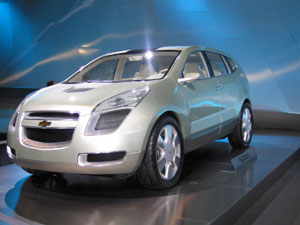
Cars purported to "run on water" actually run on the hydrogen extracted from water. But hydrogen used in internal combustion engines squanders its best potential, which is to power a fuel cell. Pictured: Chevrolet's hydrogen fuel cell prototype, the Sequel. Many challenges must be overcome before fuel cell systems will be a competitive alternative for consumers, but progress is being made. Photo: By Alan Bedenko, courtesy Flickr.
Moreover, Chiara says, the amount of greenhouse gases produced by the vehicle “would be much larger, because two combustion processes [gasoline and hydrogen] are involved.” Finally, there is a safety consideration for consumers who add these devices to their cars. “H2 is a highly flammable and explosive gas,” he says, and would require special care in installation and use.
The electrolysis process could be viable in saving energy if a renewable, non-polluting energy source such as solar or wind could be harnessed to power it, although capturing enough of that energy source on board the car would be another hurdle.
Researchers today put more focus on using hydrogen to power fuel cells, which can replace internal combustion engines to power cars and emit only water from the tailpipe. And though hydrogen is combustible and can power an internal combustion engine, to use hydrogen in that way would squander its best potential: to power a fuel cell.
Hydrogen fuel cell cars are gaining traction, but commercialization of hydrogen fuel has not yet been accomplished. “The potential benefits of fuel cells are significant,” say researchers at the U.S. Department of Energy’s National Renewable Energy Laboratory (NREL). “[H]owever, many challenges must be overcome before fuel cell systems will be a competitive alternative for consumers.”
The state of California operates a “Hydrogen Highway” program that supports development of hydrogen fuel cell technology and infrastructure. And many companies are working on ways to produce, store and dispense hydrogen. Cars powered by fuel cells are in prototype stages now, nearing production.
While we all wait to see how that shakes out, the best choice today for high mileage and low emissions is still the gasoline/electric hybrid car.
CONTACTS:
Center for Automotive Research
NREL
California Hydrogen Highway
SEND YOUR ENVIRONMENTAL QUESTIONS TO: EarthTalk, P.O. Box 5098, Westport, CT 06881;
earthtalk@emagazine.com.
Read past columns at: www.emagazine.com/earthtalk/archives.php
Tips To Prevent Motorcycle Theft
Tips to prevent motorcycle theft will help you to keep your motorcycle safe. Find out how in this article from Progressive Insurance.
(NAPSI)-According to the National Insurance Crime Bureau, more than 60,000 motorcycles were stolen last year: that's one bike stolen every 8.7 minutes. The good news is that there are simple steps that can help you protect your bike.
Leading motorcycle insurer Progressive offers these tips:
• When you're home, store your bike in a secure place like your garage, shed, or gated and locked yard.
• Always remove the key from your ignition and keep your front fork locked.
• Garage your bike out of plain view whenever possible.
• When parking in public, check on your bike frequently.
• If you have to park outdoors, do so in well-lit, secure areas. Look for an outdoor security camera and park in its view if you can.
• Always carry your registration and insurance card with you when you ride, but keep your title at home or in another secure place.
• Lock your bike to a stationary object or to another motorcycle when traveling with others. Use high-quality locking devices.
• Consider adding an audible alarm or tracking device. Systems like LoJack can not only help you locate your bike if it's stolen, but in several states, Progressive also offers a 20 percent discount on Comprehensive coverage if you have one installed on your bike. Check with your local independent agent to find out what discounts are available.
• Check with your agent to make sure you have the right coverage. If your bike is stolen, liability-only insurance won't cover the loss. Make sure your policy has Comprehensive coverage.
• And if your motorcycle is less than two years old, consider adding coverage such as Progressive's Total Loss Replacement to your policy. This coverage will pay for a brand-new bike of the same make and model if your bike is stolen or totaled.
For more information or to find an agent nearby, visit www.motorcycle.progressiveagent.com.
GPS and the Road to Greater Savings
Learn about your GPS and the road to greater savings in this informative article from MagellianGPS.
(NewsUSA) - Unwilling to ask for directions? Prepare to pay the price in gas and wear and tear on your vehicle.
Your efficiency behind the wheel can affect your bank account. If you get lost too often, you'll waste gas while putting unnecessary miles on your automobile. And in a down economy, when every penny counts, few Americans can afford taking "the scenic route."
If your sense of direction or map-reading skills prove subpar, you might want to consider purchasing a GPS device. Today's GPS devices are relatively inexpensive and offer a wide range of useful services and may actually save you money in the long run. Here are a few ways in which a GPS device can improve your efficiency behind the wheel:
- You Won't Get Lost.
With a GPS device, you'll easily find your way to your destination, no matter how labyrinth-like the backcountry roads. GPS devices tell you what road you're on, so there's no getting lost down unfamiliar roads. If you do take a wrong turn, your GPS will offer new directions until you get back en route.
- You Won't Miss Your Exit.
GPS devices offer highway lane assistance, so you'll know when your exit's approaching. For example, the Magellan Maestro 4700 tells you street names, when to turn and when to change lanes. 3D landmarks give you visual cues for maneuvers. The device includes built-in AAA TourBooks, which provide ratings and descriptions on AAA-approved places to stay, dine and save. A OneTouch menu lets you access your favorite places and searches instantly, while a voice-command feature simplifies navigation. Avoiding unnecessary exits, U-turns and backtracking will improve your fuel efficiency.
- You'll Avoid Traffic.
Idling in traffic wastes fuel and raises stress levels. A GPS unit with an integrated live traffic receiver and a subscription service will give you real-time traffic reports and offer alternative routes when roads become jammed.
- You Won't Go Out Of Your Way
to find services en route. You can program your GPS for several destinations, helping you plan the most efficient route possible. When traveling to new areas, you can use your GPS to find the nearest ATM, bank, coffee shop, restaurant or hotel so you don't waste time hunting for the services you need.
For more information, visit www.magellangps.com.
High-tech Options Offer Boost For Tires
High-tech options offer boost for tires and that means a safer ride for you.
(ARA) - They are your vehicle's only connection to the road, yet most of the time your tires are the last thing you think about. Despite being viewed by many drivers as simply round and black, today's tires are more technologically advanced than ever before. As the technology in tires rapidly advances, so do consumers' options to choose the right tires to meet their vehicle needs.
Vehicle manufacturers carefully outfit their cars and trucks with particular tires that best suit each vehicle's purpose and performance. When those original tires wear out and it is time to shop for replacement tires, there are a few important steps you should take.
Know Your Size
Check the existing sidewalls and write down the numbers you find there, especially your existing tire size. All four tires should be replaced with ones that are the same size, according to the Rubber Manufacturers Association. However, there are times when a vehicle manufacturer requires different sizes for the front and rear axles, so be sure to check your vehicle owner's manual.
Consider Driving Conditions
An all-season tire would probably be the right choice for a climate that experiences dry and regular wet conditions, along with light to moderate snowfall. Seasonally, winter tires make sense for those who live in areas that regularly get heavy snowfall or extended periods of icing or wintery mix conditions.
Know What You Want
Do you want the quiet comfort of a luxury all-season tire? Increased puncture resistance and extreme off-road traction for rock crawling? Or is it all-season performance and increased fuel economy? Thanks to recent technological advances, today's tires can give vehicles an extra edge in all these areas.
Consider Cost
You paid a lot for the technological advancements designed into your vehicle, from traction control to stability control or a sport suspension, but your tires are the only things translating those benefits to the road; if they aren't up to the task, you won't get the full benefit from your investment.
Match Needs With Tires
The outside of a tire can show a lot about its performance attributes. For example, large, aggressive-looking lugs with big spaces in between are generally good for off-road traction. Deep sweeping channels help evacuate water and slush from a tire to enhance traction. Many small "sipes" in a tire help create additional biting edges to enhance all-season traction.
An asymmetrical tread optimizes traction characteristics across the face of the tire, so the outside can optimize cornering grip, while the middle or inside provides stability and traction.
What's On The Inside?
Today's tires feature many specialized compounds and high-tech construction techniques that give them performance attributes. Examples include unique materials such as volcanic ash for icy conditions, and reinforcements such as carbon fiber and Kevlar, which can give sidewalls extra toughness, or dampen sounds and vibrations.
The newest generation of technological innovations is helping create tires that can save money at the fuel pump. Goodyear's new Assurance Fuel Max tires use a technology to better link and distribute materials within the tire compound to improve rolling resistance without sacrificing all-season traction or tread life. The result is a fuel-efficient solution that can potentially save drivers 2,600 miles worth of gas over the life of four tires. (2,600 miles based on a 4 percent fuel economy improvement, on 65,000 Mile Tread Life Limited Warranty, as compared to the standard Goodyear Assurance tire tested on P195/65R15 size – 2008 Honda Civic. Actual results may vary based on when tires are replaced, driving and road conditions, and proper tire maintenance.)
For more helpful information on tire technology or advice on selecting the proper tire for cars, light trucks, SUVs and
more, visit your local Goodyear retailer or go online to www.goodyeartires.com.
Automotive : Link Sponsors
Vehicles Become More Eco-friendly
Vehicles Become More Eco-friendly to help fight soaring gas prices and save our environment.
(ARA) - With gas prices soaring and the emphasis on preserving the environment, more and more people are becoming eco-friendly. From the influx of hybrid cars, energy-saving appliances and even more efficient light bulbs, Americans are taking notice of the environment and saving money in the process. Here are some trends in transportation that are helping save the environment.
For years, the gas and oil industries have been challenged with providing more environmental-friendly vehicles. Several car manufacturers have introduced fuel-efficient or hybrid vehicles which have been positively received by consumers. With some vehicles hitting 50 mpg, consumers are conserving fuel, saving money and helping the environment.
Scooters have become all the rage with their ease of use and incredible gas mileage. Available in gas, hybrid and electric models, scooters come in a variety of sizes to fit each individual’s needs. Smaller cubic centimeter (cc) gas scooters are great for city dwellers staying on local roads and do not require a motorcycle license. For longer commutes on highways, the larger cc engines are needed with a motorcycle license.
One of the trends seen in many retirement and gated communities is the use of electric vehicles known as "neighborhood vehicles," in lieu of cars to get around. Many of these vehicles are your typical golf cart that gets around 35 miles between charges and can hold multiple passengers, making them great for a trip to the store or around the community.
The use of electric power also is expanding to the off-road community. Known traditionally as gas-and-oil machines, all-terrain vehicles and side-by-sides are starting to go green. Recently, Polaris Industries introduced their new Ranger EV, a side-by-side built specifically for clean and quiet operation. With a 50-mile range, the electric vehicle operates at about $0.035 per mile versus $0.09 per mile on a comparable gas vehicle, making it not only more eco-friendly, but more economical.
With the continued consumer demand for alternative-powered vehicles, the use of electric and hybrid vehicles should
continue to grow which is good for the consumer and great for the environment.
Subscribe to:
Posts (Atom)